
I’ve made so much content around walking over the years—because it’s free, accessible to almost everyone, and honestly, it works.
I call it Vitamin W—a natural, side-effect-free medicine that I’ve recommended to thousands of clients across the globe. Whether someone’s dealing with lifestyle diseases, stress, or just looking to feel better, walking has always been a go-to prescription in our holistic approach.

Now, what if I told you there’s a special way of walking that brings even more benefits—not just for your body, but also for your mind and breath?
It’s the Japanese Walking Technique…
It’s a practice that’s gaining quiet momentum worldwide. Unlike the conventional walk or the push for 10,000 steps and HIIT routines, this one is slower, intentional, and deeply rooted in mindfulness and body awareness. It’s not about how far you walk, but how you walk.
The Japanese walking technique integrates posture, breath, and movement—three simple yet powerful tools we always talk about at Team Luke. And the best part? You don’t need a gym, fancy shoes, or a fitness tracker to do it. You just need your body, your breath, and a few minutes of your day.
With so many distractions, overstimulation, and stress, nowadays, this age-old way of walking can be a gentle catalyst for healing—supporting not only cardiovascular and joint health, but also digestion, emotional well-being, and even immunity.
So, let’s explore:
- What exactly this Japanese walking style is
- Why it’s more than just a walk
- The many Japanese walking benefits it offers
- And how you can integrate it into your daily life effortlessly
Time to walk your way to wellness, let’s go!
What is the Japanese Walking Technique?
Whenever I talk about movement and longevity, I can’t help but bring up Okinawa, Japan—one of the world’s five Blue Zones, where people live past 90 and even 100, often with minimal medication and full of life.
What’s their secret? It’s not fancy gyms or extreme workouts. It’s daily, intentional movement, and walking plays a huge role in that. But not just any walking—the Japanese walking technique, a mindful, posture-focused way of moving that’s deeply rooted in their culture and healing systems.
More than just steps…
The Japanese walking technique isn’t a trend—it’s an ancient way of walking practiced by monks, samurais, and healers. For them, walking wasn’t only about getting from point A to B. It was about aligning the mind, body, breath, and energy with every single step. That’s powerful.
This form of walking engages the core, supports the spine, encourages proper breathing, and brings a sense of awareness to the entire body. It turns your walk into a moving meditation—something I’ve always advocated for.
In fact, I often tell my clients, “Don’t just walk. Walk with awareness. Let your body breathe, and your mind be present.” That’s exactly what this method teaches.
How is Japanese walking different from regular walking?
Here’s what makes it unique:
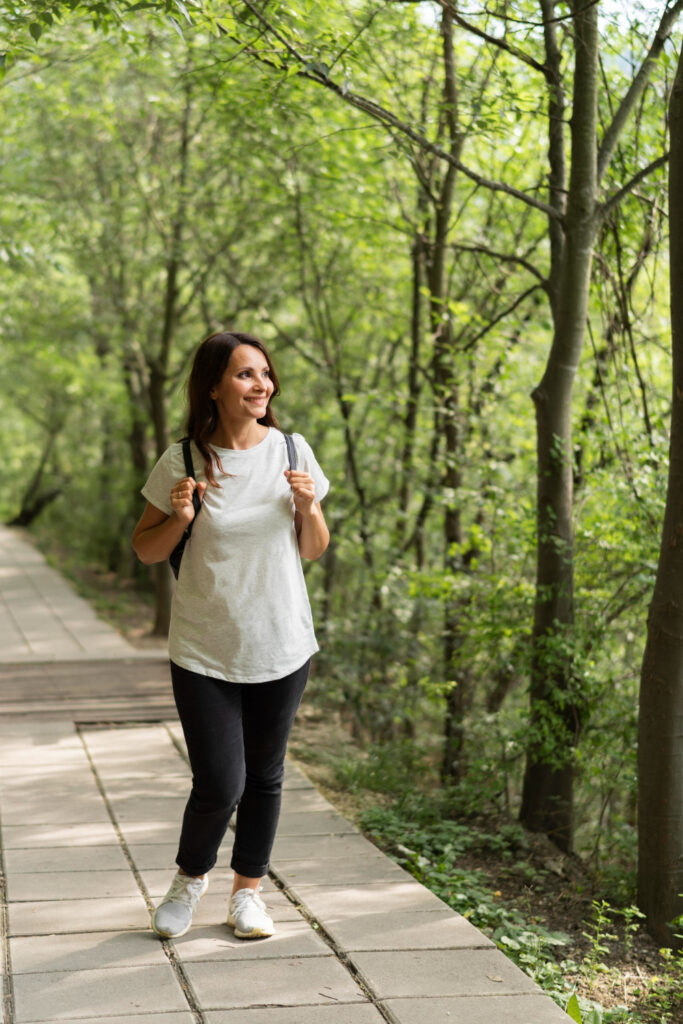
- Posture first: Your spine stays tall, chin slightly tucked in, and shoulders relaxed.
- Core activation: There’s a gentle engagement in your abdominal muscles—not a crunch, but enough to support your spine.
- Breath connection: Inhale for a few steps, exhale for the next. This creates rhythm, focus, and calm.
- Movement from the core: Instead of just dragging your feet, the movement flows from your center—your hara (a Japanese term for core energy).
- Jaw soft, face relaxed: This helps release tension and allows smooth movement and blood flow.
So what you’re really doing is aligning your body, breath, and mind. That’s the true essence of Japanese walking—it’s not aggressive, it’s graceful. It’s not exhausting, it’s healing.
Where modern meets ancient: IWT is Japanese walking in a new form
What I love is that this age-old technique has now taken a modern twist that’s trending globally—called IWT (Interval Walking Training). And I recently spoke about it in one of my Facebook Live sessions, because it’s one of the simplest yet most powerful upgrades you can bring to your daily walk.
So what is IWT?
It’s when you walk in intervals:
- Walk at your normal pace for three minutes
- Then walk briskly—your fastest, yet comfortable pace—for one minute
- Repeat the cycle for 20–30 minutes
This method, proven by Dr. Hiroshi Nose’s research in Japan, improves:
- Cardiovascular strength
- Blood pressure
- Fat metabolism
- Aerobic capacity and leg strength (by up to 17%)
So yes, the Japanese walking technique and IWT might sound new, but it’s actually centuries-old wisdom—just adapted for modern lifestyles.
How the Japanese Walking Technique Works
It’s a combination of ancient wisdom and modern science—pulling from Zen walking meditation, Hara-centered movement from Japanese martial arts, and now IWT, which is scientifically proven to improve your overall health.
Here’s how to do it, step-by-step:
- Stand tall: Spine straight, chin slightly tucked, shoulders relaxed. Keep your body open and aligned.
- Activate your core: Gently pull your belly in. Movement should feel like it’s starting from your center—your Hara.
- Walk with awareness: Take soft, natural steps—heel to toe. Let your arms swing gently and your body stay relaxed.
- Sync with your breath: Inhale for 3–4 steps, exhale for 3–4. This calms the mind and improves rhythm.
- Keep your face relaxed: Unclench your jaw, and soften your eyes. Tension-free walking = better flow.
Once you’re comfortable with the basic Japanese walking technique, you can add IWT to elevate your results.
Tips to make it a daily practice:
- After meals: Great for digestion and blood sugar regulation
- Between work calls: Even 5 minutes helps reduce tension and recharge focus
- While traveling: Airports, malls, hotel rooms—walking is always available
- Barefoot on grass or sand: Bonus points for grounding
Common Mistakes to Avoid in Japanese Walking
| Mistake | What It Looks Like | Why to Avoid It |
| Rushing the technique | Fast, unconscious walking | Reduces mindfulness and limits the therapeutic benefits |
| Poor posture habits | Slouching, tight shoulders, forward head | Impacts breathing, spinal health, and energy flow |
| Incorrect breathing patterns | Shallow, erratic, or no breath rhythm | Disrupts calm, increases stress, and reduces oxygen delivery |
| Walking from the feet only | Dragging feet without core engagement | Misses the power of Hara-centered movement and balance |
| Overstriding | Taking long, forceful steps | Can strain hips and knees; disrupts natural rhythm |
| Stiff jaw and facial tension | Clenched jaw, tight eyes | Blocks energy flow and increases muscular tension |
| Ignoring body signals | Pushing through pain or discomfort | Can lead to injury or fatigue; goes against mindful movement |
Health Benefits of the Japanese Walking Technique
What I love most about this practice is how it touches every layer of your well-being—your heart, joints, immune system, nervous system, and even your mind. Let’s look at the full spectrum of Japanese walking benefits.
Physical Benefits:
The Japanese walking technique doesn’t demand much from you—but it gives a lot in return.
- Supports heart health: By coordinating breath with movement and adding interval bursts (like in IWT), you gently train your heart without overloading it.
- Improves joint & muscle function: It supports your knees, hips, and spine without impact. The gentle engagement of your core helps strengthen deep abdominal muscles and improves postural alignment.
- Enhances oxygen & nutrient delivery: With every intentional breath and step, you’re improving cellular oxygenation—a key to a better metabolism, energy, and cellular repair.
Mental & Emotional Wellness:
This is where the Japanese walking benefits really shine. So many people walk with tension, racing minds, and clenched jaws. But when you walk the Japanese way, something shifts.
- Reduces anxiety & racing thoughts: Syncing breath with steps creates a rhythmic calm, anchoring your nervous system. This can help ease worry, stress, and overwhelm.
- Improves mental clarity & focus: Like meditation in motion, it enhances mindfulness, bringing you back to the present moment.
- Lowers cortisol (stress hormone): When you walk with awareness, your body activates the parasympathetic nervous system—your natural healing state.
Immunity & Lifestyle Recovery:
Here’s where the Japanese walking technique truly fits into a holistic wellness strategy:
- Primes the immune system: Consistent, low-impact movement reduces inflammation, improves circulation, and helps your immune cells move freely.
- Supports recovery from lifestyle conditions: Whether it’s high blood pressure, fatigue, anxiety, or mild metabolic disorders, mindful walking complements your healing process—without side effects.
- Works with integrative medicine: If you’re already on a protocol—whether it’s nutrition, therapy, or medication—this style of walking amplifies the effect by supporting root-cause healing: inflammation, stress, movement, and breath.
So whether you’re dealing with chronic fatigue, a healing gut, fluctuating blood sugar, or just high stress—don’t underestimate the Japanese walking benefits.
Integrating the Japanese Walking Technique into Your Wellness Path
Here’s how you can make it part of your everyday routine—your way, based on your body, schedule, and lifestyle.
Create Your Walking Strategy (It’s Personal)
There’s no one-size-fits-all protocol. You don’t need to copy someone else’s 10,000 steps or 60-minute power walk. What matters is that it fits into your life.
Here’s a sample walking strategy to help you start small and build gradually:
| Time of Day | Duration | Style | Purpose |
| Morning | 10-15 mins | Gentle Japanese walking | Sets the tone for the day and enhances the metabolism |
| Post-Lunch | 5-10 mins | Slow, mindful walk | Supports digestion, balances blood sugar |
| Evening | 20-30 mins | Interval Walking (IWT) | Heart health, fat metabolism, stress relief |
| Stressed out? | 5 mins | Barefoot + breath-focused | Nervous system reset |
Pro tip: Start with just one slot a day. Once it becomes a habit, layer more walks into your day.
Pair It with Food and Lifestyle Habits
Movement works best when paired with nourishment. The Japanese walking technique beautifully complements:
- Mindful eating: After meals, walk slowly for 5–10 minutes to support digestion and blood sugar control
- Balanced meals: Add clean carbs, healthy fats, and protein—fuel for your movement
- No extreme fasting after walks: Fuel post-IWT walks with a light, nutritious snack if needed
- Hydration: A walk + warm water = better lymphatic flow and cleansing support
And as I always say, listen to your body. If you’re tired, walk slowly. If you’re feeling strong, add a brisk interval or two.
The Last Word
At the end of the day, the Japanese walking technique isn’t just about walking differently.
It’s about returning to the body.
To your breath.
To presence.
It’s one of the most underrated tools I’ve seen transform lives—not by doing more, but by doing less with more awareness.
Try it for 7 days—walk slow, walk mindfully, breathe deeply. Watch how your body begins to respond—your digestion, energy, mood, even sleep.
So go ahead, and give this technique a try. And if you’ve already started or have questions—share your experiences. I’d love to hear how your journey with Japanese walking unfolds.

Frequently Asked Questions
1. What is the Japanese walking technique?
The Japanese walking technique is a mindful way of walking that focuses on posture, breath, and core engagement. Unlike regular walking, it aligns body and mind for holistic health benefits, making it a simple yet powerful wellness tool.
2. What are the health benefits of Japanese walking?
Japanese walking benefits include better heart health, improved joint mobility, reduced stress, enhanced metabolism, and immune support. Studies also show improved blood pressure, mental clarity, and muscle tone with consistent practice.
3. How is Japanese walking different from normal walking?
Unlike normal walking, the Japanese walking technique emphasizes tall posture, abdominal engagement, relaxed jaw, and rhythmic breathing. It turns walking into a meditative, healing movement for the entire body.
4. Can beginners do Japanese walking every day?
Absolutely. Japanese walking is gentle and beginner-friendly. Start with 10–15 minutes daily and build up. It’s free, sustainable, and suitable for most fitness levels. Just listen to your body.
5. What is interval walking training (IWT) in Japanese walking?
IWT involves alternating between normal and brisk walking every few minutes. It’s part of the Japanese walking technique and helps improve cardiovascular fitness, fat metabolism, and energy levels naturally.
Disclaimer: The information shared in this blog is for educational purposes only and not intended to replace medical advice, diagnosis, or treatment. Always consult your healthcare provider before beginning any new fitness or wellness routine—especially if you have an existing medical condition, injury, or mobility concern.
Looking for holistic and integrative guidance on physical well-being?
We help you find a way.
Set up a one-on-one consultation with our integrative team to optimize your lifestyle goals.
Reach out to us at 1800 102 0253 or write to us at [email protected].

Start Your Wellness Journey
Feeling inspired to take the next step in your wellness journey? Connect with us to explore how our tailored programs can support your health journey. Your transformation is just a conversation away.