
Why are more and more couples turning to in vitro fertilization (IVF) today, and what if success weren’t only in the lab, but also within your own body?
This question has become deeply personal for many couples worldwide. Let’s first acknowledge something important: the rising number of couples exploring IVF today reflects a world where science has evolved to offer a helping hand when nature needs support.
According to a report published by the World Health Organization, approximately 1 in 6 people globally experience infertility during their lifetime. As social, environmental, and lifestyle shifts continue to impact reproductive health, IVF has become a widely accepted option, not just a last resort.
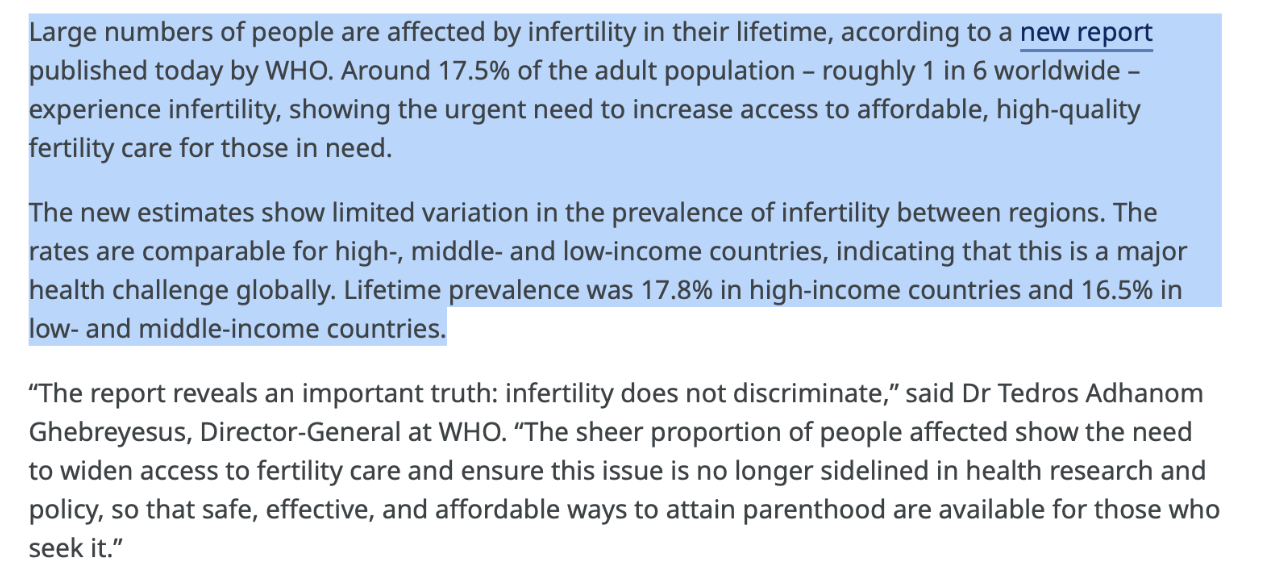
Source: 1 in 6 people globally affected by infertility: WHO. (n.d.). Who.int. Retrieved July 8, 2025, from https://www.who.int/news/item/04-04-2023-1-in-6-people-globally-affected-by-infertility
That’s where this conversation begins.
The Fertility Landscape Today
In India, the figure of infertility is hovering between 10–15% of couples, with infertility clinics reporting a steady year-on-year increase. It’s a growing public health concern.
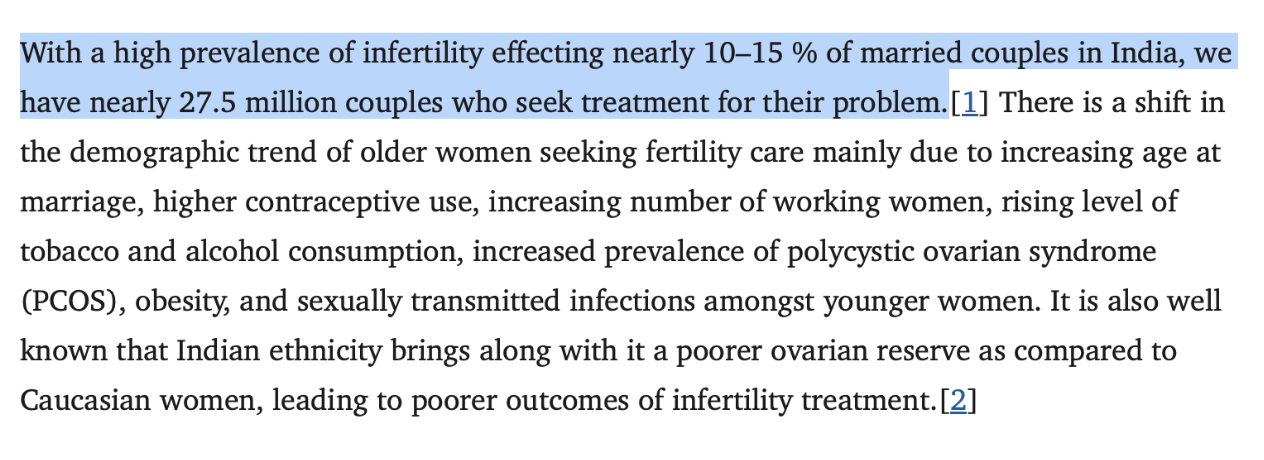
Source: Shah D. (2017). Expanding IVF treatment in India … need of the day! Journal of Human Reproductive Sciences, 10(2), 69–70. https://doi.org/10.4103/jhrs.JHRS_99_17
Why is the demand for IVF rising so steadily, and what does it reflect about the way we live today?
Here are some of the broader factors contributing to this change:
- Later Parenthood: More individuals are choosing to start families in their late 30s and even 40s. While that’s a personal and often empowering choice, biologically, age still plays a role in fertility potential.
- Environmental Burden: From air quality to pesticide-laden produce and exposure to plastics, we live in an environment where endocrine-disrupting chemicals (EDCs) are commonplace. These EDCs interfere with hormone signaling, particularly estrogen and testosterone, and are being increasingly linked to reproductive dysfunction.
- Overstimulation & Sedentary Life: Our bodies were not designed for 12 hours of screen time and 6 hours of sleep. The mismatch between biology and lifestyle, like constant light exposure, erratic schedules, and chronic sitting, has implications for hormonal regulation, particularly in women with PCOS or irregular cycles.
- Shift in Food Culture: Nutrient-depleted foods, gut imbalances, and high sugar consumption quietly influence reproductive health over time. It’s not just about weight, it’s about metabolic health.
While IVF is often seen as the answer, what we rarely discuss is this: IVF is a process that requires preparation, not just physically, but internally. It’s not a quick solution, but a collaboration between science and your system.
Understanding IVF: What Science Can Do, and What It Can’t
Let’s demystify IVF for a moment, not with jargon, but with clarity..
IVF, or in-vitro fertilization, is a method where an egg is fertilized by sperm outside the body and later implanted into the uterus. The process involves controlled ovarian stimulation, egg retrieval, fertilization in a lab, and embryo transfer. For many couples, it offers a path when natural conception hasn’t worked, or when specific medical conditions make it difficult.
IVF is a scientific masterpiece. But it’s important to remember: it manages the mechanics, not the terrain. That terrain, your body’s internal environment, still has the final say.
If you’ve been wondering how to reduce stress during IVF, or how to improve IVF success beyond the clinic, here’s your answer: it begins with aligning your body to receive what science is offering.
Medical technology plants the seed, but your body provides the soil. And when the soil is balanced, resilient, and receptive, the seed stands a far greater chance of thriving.
Lifestyle Is the Missing Link: It’s Not Just the Seed, It’s the Soil
When couples start IVF, there’s so much focus on protocols, injections, schedules, and lab reports that the body’s internal environment is often treated like a passive vessel, rather than an active partner.
But the body is always communicating. And its readiness isn’t just about lining up hormone levels or prepping the uterus. It’s about balance. Safety. Receptivity.
What does that really mean?
Let’s look at a few foundational lifestyle pillars that influence your body’s receptivity in ways that IVF itself cannot control:
- Stress Response and Nervous System Health: Stress isn’t just mental. It’s deeply physiological. When your nervous system is constantly in a sympathetic state, fight or flight, it sends signals of danger, not receptivity. This can suppress reproductive hormone signaling and impair uterine receptivity.
- Biological Signaling from Daily Choices: Every meal, every hour of sleep, every walk in fresh air sends a biochemical message to your body. These aren’t just routines; they’re signals that influence insulin sensitivity, cortisol balance, and immune modulation. All of which matter in the IVF process. For instance, irregular eating patterns, poor quality fats, and excess caffeine can create glycemic fluctuations and hormonal spikes. Over time, this disrupts leptin, estrogen, and thyroid hormone regulation, each of which plays a subtle yet pivotal role in fertility.
- Inflammatory Load and Cellular Environment: IVF supports the fertilization and transfer process, but implantation and embryo survival are deeply influenced by your immune and inflammatory status. Chronic inflammation doesn’t come from one factor. It builds silently through poor gut health, emotional suppression, excess sugar, chronic sleep deprivation, or even unresolved trauma. And while it often goes undetected in fertility clinics, it speaks volumes through how your body feels: fatigue, brain fog, bloating, irregular cycles, and skin issues.
- Mitochondrial Energy and Egg/Sperm Quality: Mitochondria, your cellular powerhouses, play a huge role in both egg and sperm health. IVF can select high-quality embryos, but it can’t improve the underlying mitochondrial function of your reproductive cells.
And while medical protocols can guide the process, it’s these lifestyle signals that often determine how well your body is able to receive.
Let’s begin with one of the most underestimated disruptors on the IVF journey:
1. Stress: The Silent Blocker
You’ve probably heard it before: “Just relax, and it’ll happen.”
But if you’re walking the IVF journey, you know how unhelpful and sometimes hurtful that can feel.
When you’re under stress, whether it’s due to uncertainty, past loss, societal pressure, or even the demands of an IVF cycle, your body activates the hypothalamic-pituitary-adrenal (HPA) axis, the system responsible for managing your stress response. Here’s what happens next:
- Cortisol levels rise, sending a signal to the brain that the body is under threat, even if the threat is emotional or invisible.
- This shift suppresses gonadotropin-releasing hormone (GnRH), which in turn affects luteinizing hormone (LH) and follicle-stimulating hormone (FSH), both critical for ovulation and healthy menstrual cycles.
- In men, chronic stress can lower testosterone and reduce sperm quality.
- In women, stress may interfere with endometrial receptivity, making implantation more difficult.
A landmark meta-analysis published in Fertility and Sterility (2011) found that women with high stress levels before and during IVF had significantly lower pregnancy rates.
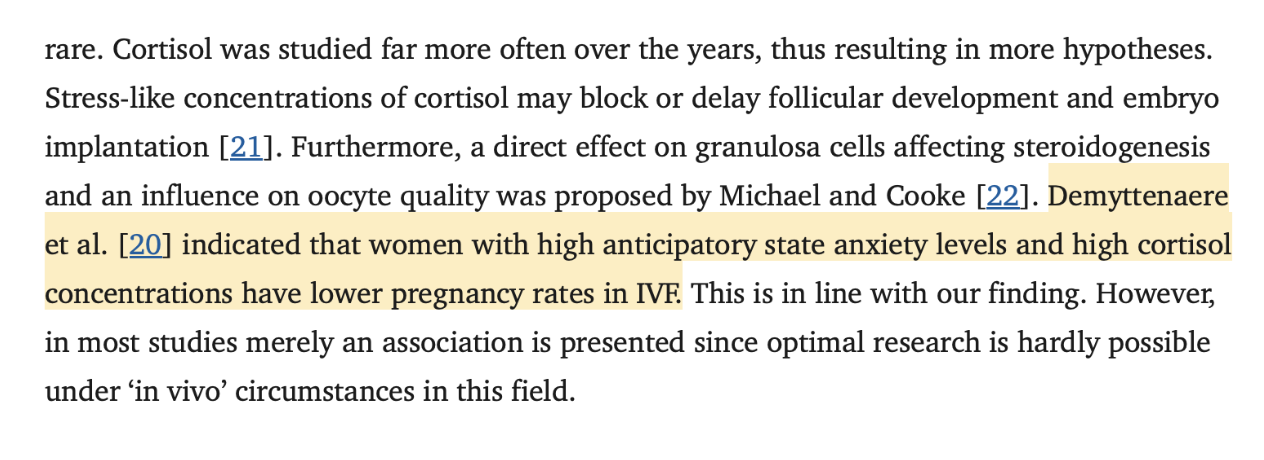
Source: An, Y., Sun, Z., Li, L., Zhang, Y., & Ji, H. (2013). Relationship between psychological stress and reproductive outcome in women undergoing in vitro fertilization treatment: psychological and neurohormonal assessment. Journal of assisted reproduction and genetics, 30(1), 35–41. https://doi.org/10.1007/s10815-012-9904-x
And no, this doesn’t mean ‘thinking positive’ guarantees success. That’s not the takeaway. What this means is: your emotional state is deeply connected to your reproductive physiology.
So, How to Reduce Stress During IVF?
Not through perfection. But through regulation and support. Here are three science-backed ways to soften the stress load:
-
The Breath: A Tool That’s Always With You
Your breath is one of the only tools that bridges your autonomic nervous system and conscious control. It’s free, always available, and powerful enough to regulate stress hormones within minutes.
Slow breathing activates the vagus nerve, which signals the brain that you’re safe. This, in turn, lowers cortisol, stabilizes reproductive hormone signaling, and creates the internal sense of ‘all is well.’
Even just 3–5 minutes of slow nasal breathing before an IVF appointment or procedure can create noticeable calm in the system.
Simple practice to begin with:
- Sit or lie down with your spine supported.
- Inhale through your nose for a count of 4.
- Hold for 2.
- Exhale through your nose for a count of 6.
- Repeat for 10–12 rounds.
This gentle elongation of the exhale tells your nervous system: “You’re safe now.”
-
Mindfulness Is Not a Buzzword
Mindfulness isn’t about emptying your mind. It’s about noticing, without judgment, what you feel, what you think, and how your body is responding.
Mindfulness has also been linked to better emotional regulation, improved sleep quality, and reduced inflammatory cytokines, all of which support reproductive success.
Easy ways to start:
- Mindful eating: Slow down and actually taste your food.
- Mindful walking: Feel each step. Observe your surroundings.
- Body scan meditation: Bring awareness from head to toe, gently observing tension or ease.
- One mindful moment a day: Just place a hand on your heart and breathe.
You don’t need 60 minutes on a yoga mat. You need one real moment of connection, consistently.
2. Sleep: Where the Body Repairs, Balances, and Regulates
Sleep is not just rest. It’s regeneration. During deep sleep, the body carries out hormonal recalibration, immune modulation, cellular repair, and stress recovery, all of which are foundational for reproductive readiness.
Poor sleep, whether due to stress, shift work, screen overuse, or hormonal changes, disrupts the hypothalamic-pituitary-ovarian (HPO) axis, impacting ovulation, progesterone production, and uterine lining quality.
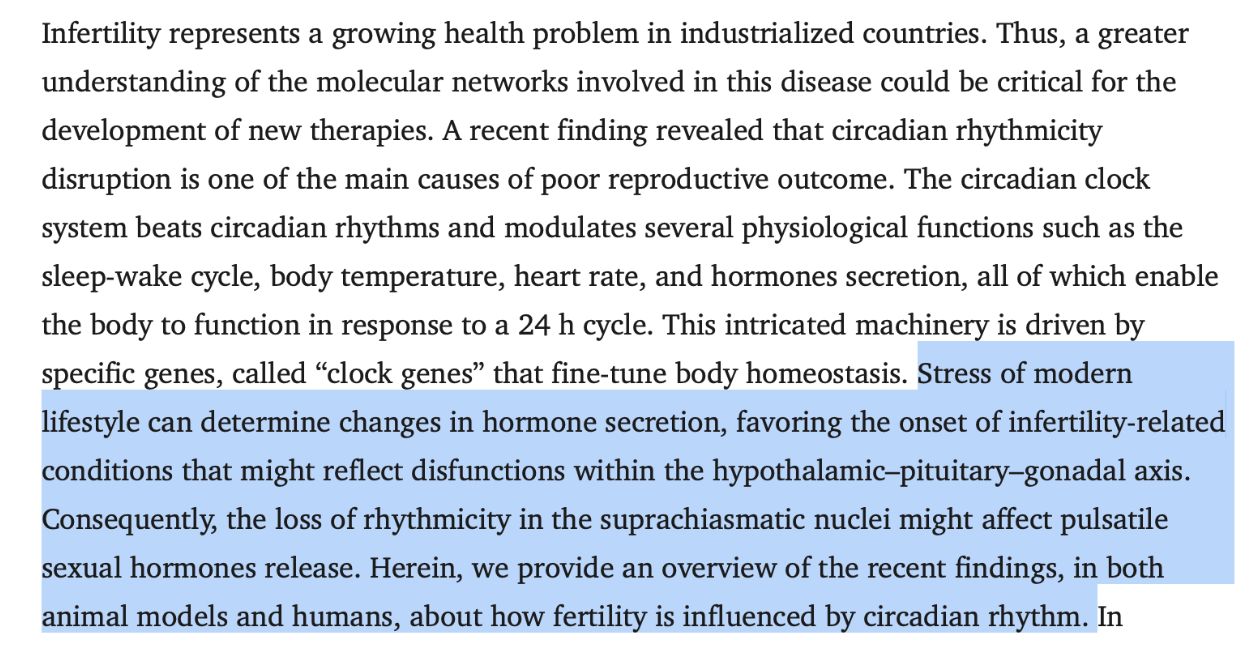
Sleep also reduces cortisol. So, if you’re asking how to reduce stress during IVF, one of the simplest and most powerful strategies is protecting your sleep window, especially before and during stimulation and implantation.
Supportive strategies:
- Create a wind-down ritual (no screens 60–90 minutes before bed)
- Eat your last meal at least two to three hours before sleeping
- Keep sleep and wake times consistent, even on weekends
- Expose your eyes to natural light early in the morning to regulate melatonin
3. Gut Health: Your Inner Fertility Ecosystem
Your gut is home to trillions of microbes that influence everything from immunity to inflammation to estrogen metabolism. The gut-hormone-immune axis is one of the most underappreciated players in reproductive health.
The gut’s role in estrogen clearance is particularly critical during IVF. A dysbiotic gut (an imbalance of good and bad bacteria) can impair estrogen pathways, leading to estrogen dominance, which affects endometrial receptivity and can interfere with implantation.
How to improve IVF success through gut support?
Follow these:
- Prioritize a whole-food, fiber-rich food with diverse plant foods
- Include prebiotics (onions, garlic, bananas, oats) and probiotics (fermented foods like curd, sauerkraut, kanji)
- Limit excessive sugar and ultra-processed foods, which promote dysbiosis
- Chew thoroughly, digestion begins in the mouth
- Stay hydrated to support bowel regularity and toxin clearance
4. Hormonal Rhythm: Your Body’s Natural Fertility Intelligence
IVF protocols introduce synthetic hormones, but your body’s response to those hormones still depends on its own endocrine rhythm.
Disrupted hormonal rhythms, due to poor sleep, emotional stress, insulin resistance, or inflammation, can interfere with ovulation, luteal phase function, and even egg maturation. Additionally, insulin, often overlooked, can influence ovarian androgen levels. High insulin levels, common in PCOS or prediabetes, can impair follicular development and reduce IVF responsiveness.
What supports hormonal alignment naturally?
- Eating at regular intervals to stabilize blood sugar
- Moving the body daily with yoga, walking, or strength training
- Prioritizing sleep and morning light exposure to regulate melatonin and cortisol
- Managing emotional stress through breathwork, journaling, or support circles

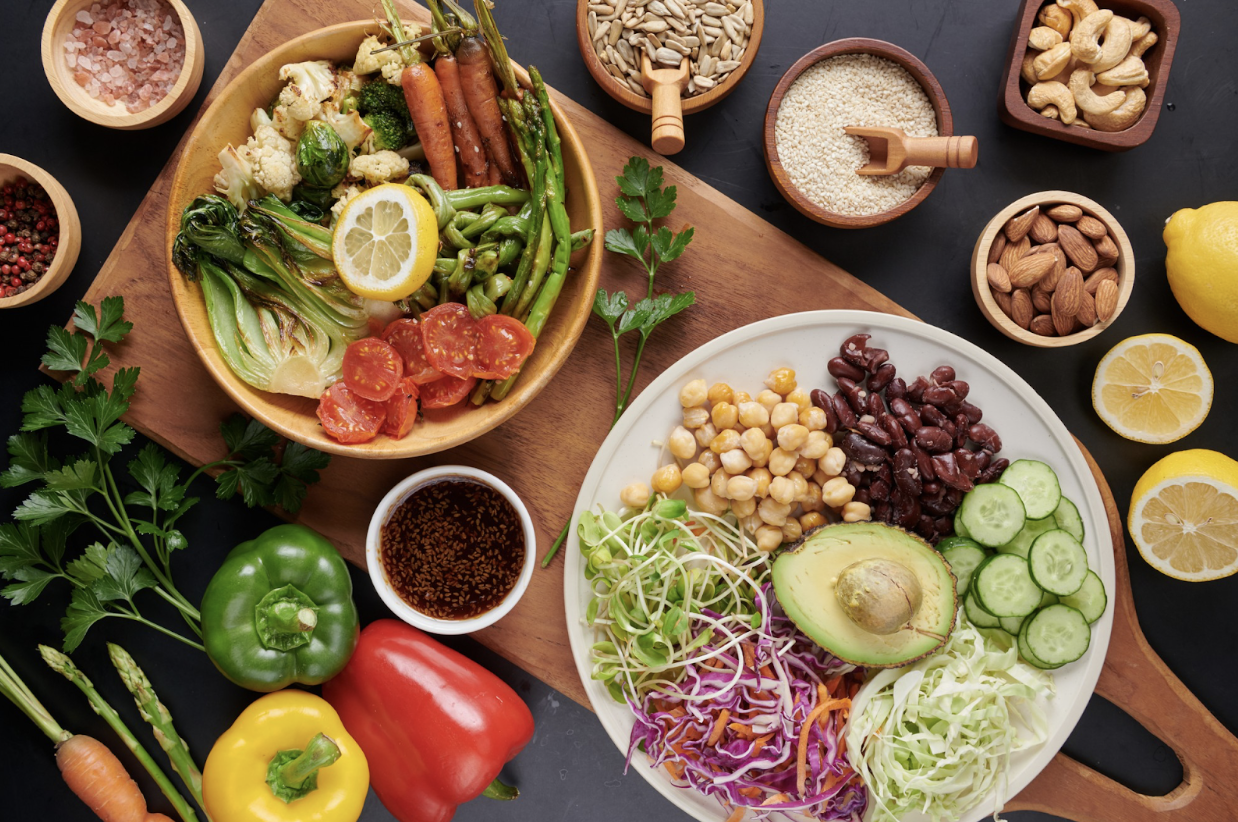
5. Food: More Than Fuel, It’s Fertility Support
Fertility isn’t just about hormones and procedures; it begins at the cellular level. Every egg, sperm, and hormone depends on what you eat, absorb, and assimilate. During IVF, your body is under high demand, and nutrition becomes the raw material it leans on.
Think of food as cellular communication; it signals safety, nourishment, and readiness for new life.
Here are four key nutritional pillars that support IVF success:
- Antioxidants: Protecting Eggs and Sperm:
Oxidative stress impacts embryo quality and IVF outcomes. Antioxidants neutralize free radicals and support mitochondrial health in reproductive cells.
Eat more: berries, moringa, spinach, walnuts, turmeric, amla, and green tea.
- Healthy Fats: Building Blocks of Hormones:
Essential fats support hormone synthesis, egg health, and sperm motility.
Include: avocados, ghee, pumpkin seeds, flaxseeds, sesame oil, walnuts, and fatty fish.
- B Vitamins & Folate: DNA and Cell Support
Folate and B-complex vitamins aid egg maturation, implantation, and early embryo development.
Focus on: leafy greens, lentils, beets, eggs, and nutritional yeast (if vegan).
- Iron & Zinc: Micronutrients That Matter
Iron boosts uterine blood flow; zinc supports follicle growth and progesterone production.
Sources include: pumpkin seeds, sesame seeds, garden cress (halim), amaranth, and dried figs.
Letting Go of Perfection: The Mindset Shift That Changes Everything
If there’s one silent pressure many couples carry through IVF, it’s this:
“I have to do everything right.”
The right food. The right mindset. The perfect stress response. The perfect body. The perfect outcome.
But here’s the truth: perfection is not a prerequisite for conception. Safety is. Readiness is. Self-compassion is.
What Letting Go Can Look Like (and Feel Like)
Letting go isn’t a passive act. It’s a conscious choice to loosen the grip. And it can look like:
- Skipping the guilt after a less-than-perfect meal or skipped meditation
- Asking for help when you’re tired, instead of powering through
- Letting yourself feel disappointment without judging those feelings
- Taking a break from researching, and just being with your partner
- Honoring your own timeline, not society’s expectations
These small, intentional choices tell your body: “You’re safe. You’re supported. You’re enough.”
And in return, the body often responds with more balance, better hormone flow, and a calmer internal chemistry.
Your Body Isn’t a Machine — It’s a Living Landscape
Whether you’re just beginning IVF, in the middle of it, or preparing for another cycle, know this:
You are not broken. Your body isn’t failing.
It may just be asking for a little more support. A little more safety. A little more gentleness.
And that support doesn’t always look like big changes.
Sometimes, it’s as simple as a deeper breath. A better night’s sleep. A warmer meal. A softer inner voice.
If you’re wondering how to reduce stress during IVF, start small. Consistency, not intensity, is what builds internal safety.
If you’re exploring how to improve IVF success, look inward, not just outward. Support your body not out of fear, but out of respect.
Let science do what it does best.
You’re not alone. And you’re not without power.
Watch this story of how this woman, after two miscarriages, PCOD, thyroid struggles, and years of emotional burnout, rebuilt belief in her body, and naturally conceived at 40 after 13 years:
Disclaimer: This blog is for informational and educational purposes only. It is not intended to replace medical advice, diagnosis, or treatment from a qualified healthcare professional. IVF is a complex medical process, and individual cases vary greatly. The insights shared here are based on emerging scientific research and lifestyle principles that may support overall well-being and reproductive health. Always consult your qualified healthcare provider before making any changes to your medical plan or treatment protocol.
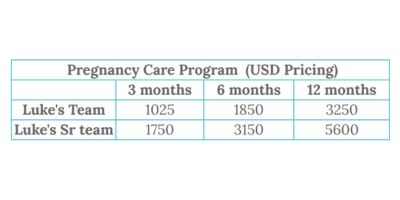
True fertility and pregnancy care go beyond medications; they begin with the way you live, nourish, rest, and think.
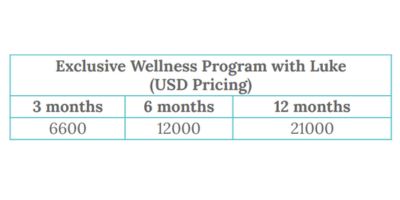
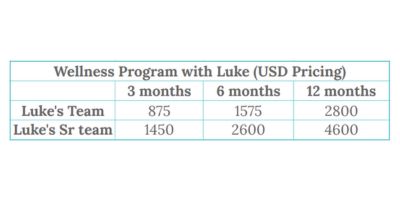
Our Wellness Program gently supports your body’s innate intelligence through personalized lifestyle and integrative strategies, alongside your doctor’s protocol.
Reach out to us at 1800 102 0253 or write to us at [email protected].

Start Your Wellness Journey
Feeling inspired to take the next step in your wellness journey? Connect with us to explore how our tailored programs can support your health journey. Your transformation is just a conversation away.